On holiday, your phone does everything: it is the boarding pass, the map, the camera, the bank and the key to the apartment. And it is precisely when it works hardest that you pay it the least attention, because you are resting, somewhere unfamiliar, in a hurry to get to the beach.
People who make a living deceiving others know this, and the numbers prove it. In May 2025, Portugal's Polícia Judiciária closed the investigation into a network advertising holiday homes that did not exist: 143 victims heard, 150,000 euros in losses and 20 suspects charged, with the "booking" payments flowing through the bank accounts of recruited money mules. The GNR, Portugal's gendarmerie, counted 2,344 home burglaries by the end of May this year and renewed its warning that the holiday period is the most sensitive one, with the Algarve's Faro district topping the list.
The pattern is not just Portuguese. In the United Kingdom, holiday fraud cost victims more than 11 million pounds in a single year, and July was precisely the month with the most reports. And Airbnb, in a joint alert with Portugal's PSP police and the National Cybersecurity Centre, counted about 3,200 phishing domains created in a single year to impersonate it.
The good news is the same as ever: you don't need to buy anything. It comes down to ten gestures, and half of them happen before you zip the suitcase.
Before you leave
- Prepare the phone for the worst. Turn on "Find My" (Find My on iPhone, Find Hub on Android), make a backup, and enable the recent anti-theft protections: on iPhone, Stolen Device Protection; on Android, Theft Detection Lock, which locks the screen by itself if someone snatches the phone from your hand and runs. This is what lets you locate, lock or erase a stolen phone, and none of it can be switched on in hindsight.
- Have your house watched, for free. In Portugal, the GNR and PSP will keep an eye on your home while you are away, under the Chave Direta programme of Operation Verão Seguro. Request it online at veraoseguro.mai.gov.pt at least 48 hours in advance, at no cost.
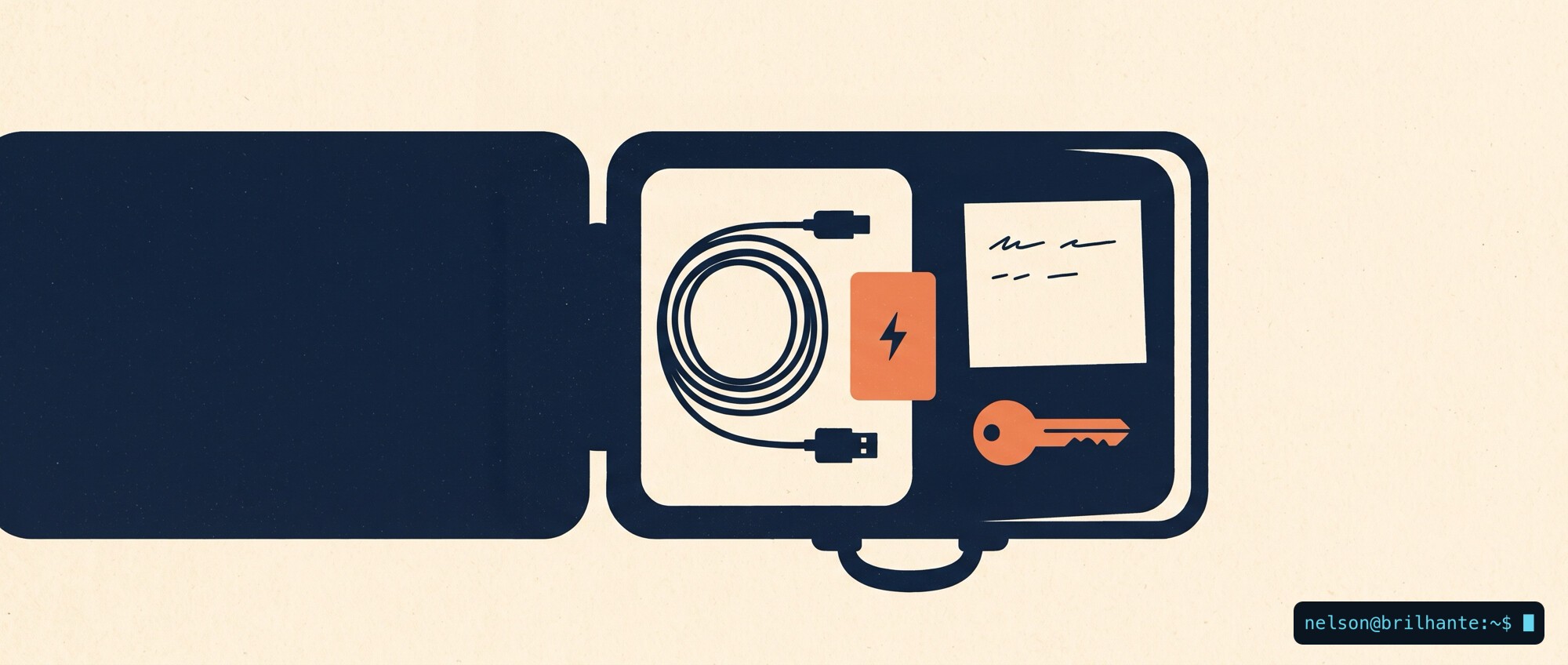
- Take your own charger and a power bank. Not because of the myth of booby-trapped airport USB sockets, which has never produced a documented real-world case and which modern phones already defend against by asking before granting data access. It is because a dead phone in unfamiliar territory is your ticket, your map and your bank all gone at once.
- Write two numbers on paper. Your bank's support line and the international card-blocking line for Portuguese cards (+351 217 918 780, 24 hours). If the phone disappears, the numbers you will need cannot disappear with it.
On the road
- The photos can wait until you are back. Posting the beach in real time announces to anyone watching that your house is empty, and the GNR has been asking people not to do it for years. The album can wait a week, and the likes will come just the same.
- Cash machines, with judgement. In tourist areas, prefer the machines inside bank branches, distrust loose or protruding parts on the card slot, which can be fake readers installed to copy it, and always cover the PIN with your other hand.
- Hotel Wi-Fi is fine for almost everything, except the bank. The internet has changed: the overwhelming majority of sites are now encrypted, and public Wi-Fi is no longer the danger it once was. The real risk is different: fake networks named after the hotel and login pages that ask for more than they should. If the Wi-Fi portal asks for one of your passwords or a card "to grant access", stop and confirm the network name at the front desk. For the bank and other sensitive accounts, use mobile data, which removes the doubt entirely.
- Your booking is never "confirmed" through a link. There are scams running inside the booking platforms themselves: criminals take over a real hotel's account, and the message reaches you in the app or by email, with your correct dates and name, asking you to "confirm the payment" through a link. UK police logged 532 reports and 370,000 pounds lost exactly this way between 2023 and 2024. Never pay or confirm anything outside the official app. Open it yourself and check inside; if there really is a problem, it will be there.
If things go wrong
- Phone stolen, right order. From another device, mark it as lost in "Find My", which locks it and suspends the stored cards, and change your email password. Only then worry about the rest.
- Card compromised, call now. The clock plays on your side: once you report it, the bank must return the money from unauthorised operations quickly, as a rule by the end of the next business day, and for what happened before you called you bear at most 50 euros. Every hour you don't call is the only loss that is truly yours.
The August scammer counts on the same thing as the rest of the year, your hurry, only in holiday form: the tiredness of the trip, the unfamiliar counter, the check-in queue. These ten gestures don't spoil the rest, they buy it. Do half before zipping the suitcase, and the holidays will owe you nothing but good memories.
To go further: home-watch requests are made at veraoseguro.mai.gov.pt, and Portugal's National Cybersecurity Centre publishes practical guides for citizens.
Sources: Polícia Judiciária, GNR (via RTP), Action Fraud UK (via ATOL), PSP, CNCS and Airbnb.
#StaySafe
🙏🖖