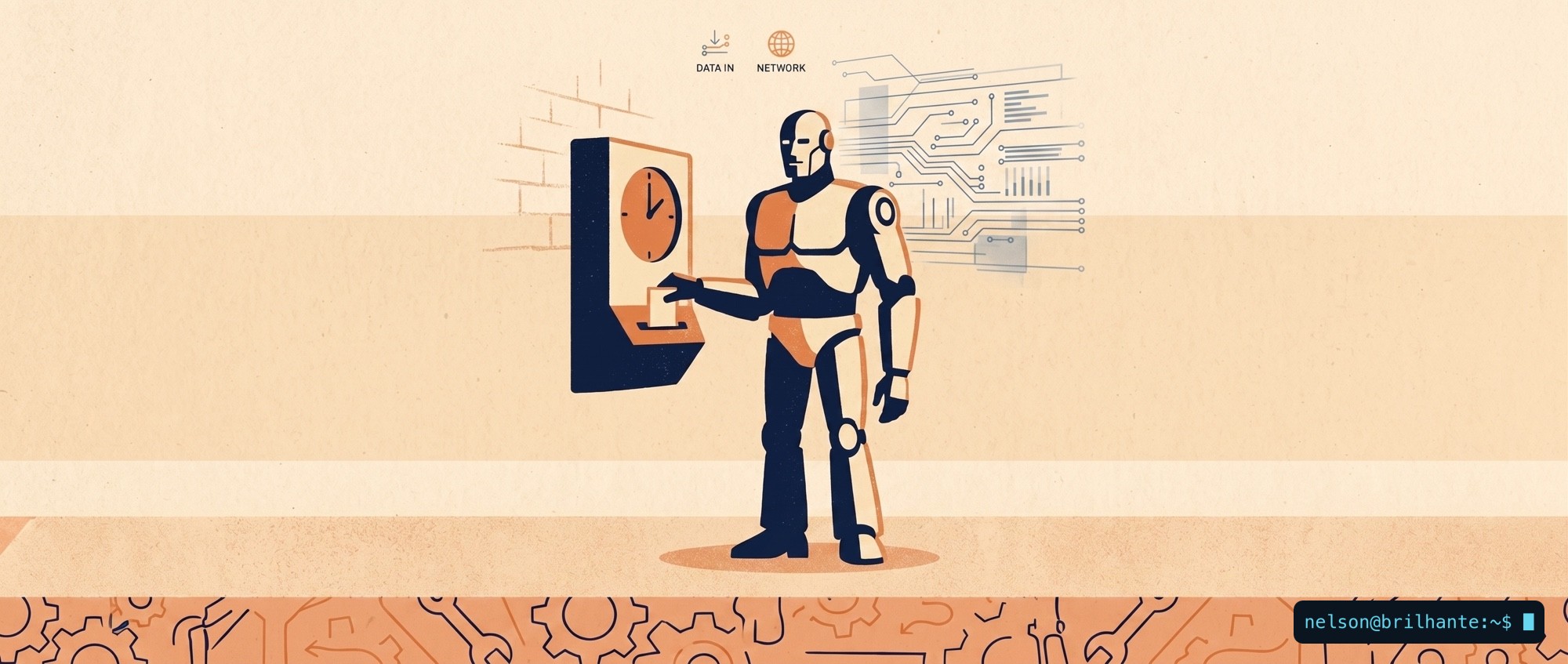
There is already a person-sized robot that promises to vacuum your home, water the plants, fold the laundry and load the dishwasher, and you can order it today. Humanoids sell from $5,900, and the more capable ones already work in real factories. The question is no longer whether this is science fiction. It is what these machines actually do, at home and at work, and what they cost.
The clearest sign came this week. At Automate 2026, the largest automation show in the United States, which closed a few days ago in Chicago, humanoid robots had a pavilion to themselves for the first time. More than twenty models stood side by side, and almost no one there was still asking whether the things worked. The question had changed: it was no longer "will this actually work?" but "how fast can factories absorb them?".
It is a small change in wording and a huge one in consequence. For years, the humanoid was a circus act, a machine filmed doing acrobatics for millions of views. The acrobatics are still there. What is new is that, this year, some of these robots began showing up on real assembly lines, clocking shifts and being billed by the hour like any temp worker.
What you actually get for your money
For most people reading this, the first question is the one about home: what would one of these do in my living room? NEO, from 1X, is the one built for that. It promises to vacuum, water the plants, fold the laundry, load the dishwasher and even answer the door. Still, know the catch: at first a human operator guides it remotely while the AI learns, so for now you are buying the promise more than the autonomy.
NEO, from 1X, doing household chores at home. Video: 1X.
At work, the story is already more concrete. What these machines really do today is the most monotonous kind of labour: moving material. Figure robots spend whole shifts identifying, turning and sorting packages on their own, and robots like Digit do the same with bins in warehouses. This is where the math closes, almost always through rental, not purchase. And if the idea is just to learn and tinker, a G1 or an R1 will let you program and demonstrate, not put a robot to work.
Figure robots sorting packages on their own with the Helix system. Video: Figure.
From Tokyo to the factory floor
The story did not begin yesterday. In 1973, at Waseda University in Tokyo, Professor Ichiro Kato's team finished WABOT-1, the first full-size robot that walked on two legs and grasped objects. For decades, humanoids were laboratory experiments. Honda, after a program that began in secret in the 1980s, unveiled ASIMO in 2000, and for more than twenty years it was the face of walking robotics. In 2013, Boston Dynamics revealed the hydraulic Atlas for a challenge run by the US military agency DARPA, and the internet filled with videos of a machine that ran and jumped like an athlete. The leap from curiosity to employment came after 2021, when Tesla announced Optimus and opened the floodgates to investment. In little more than five years, dozens of companies joined the race, and the humanoid moved from the tech show to the factory floor.
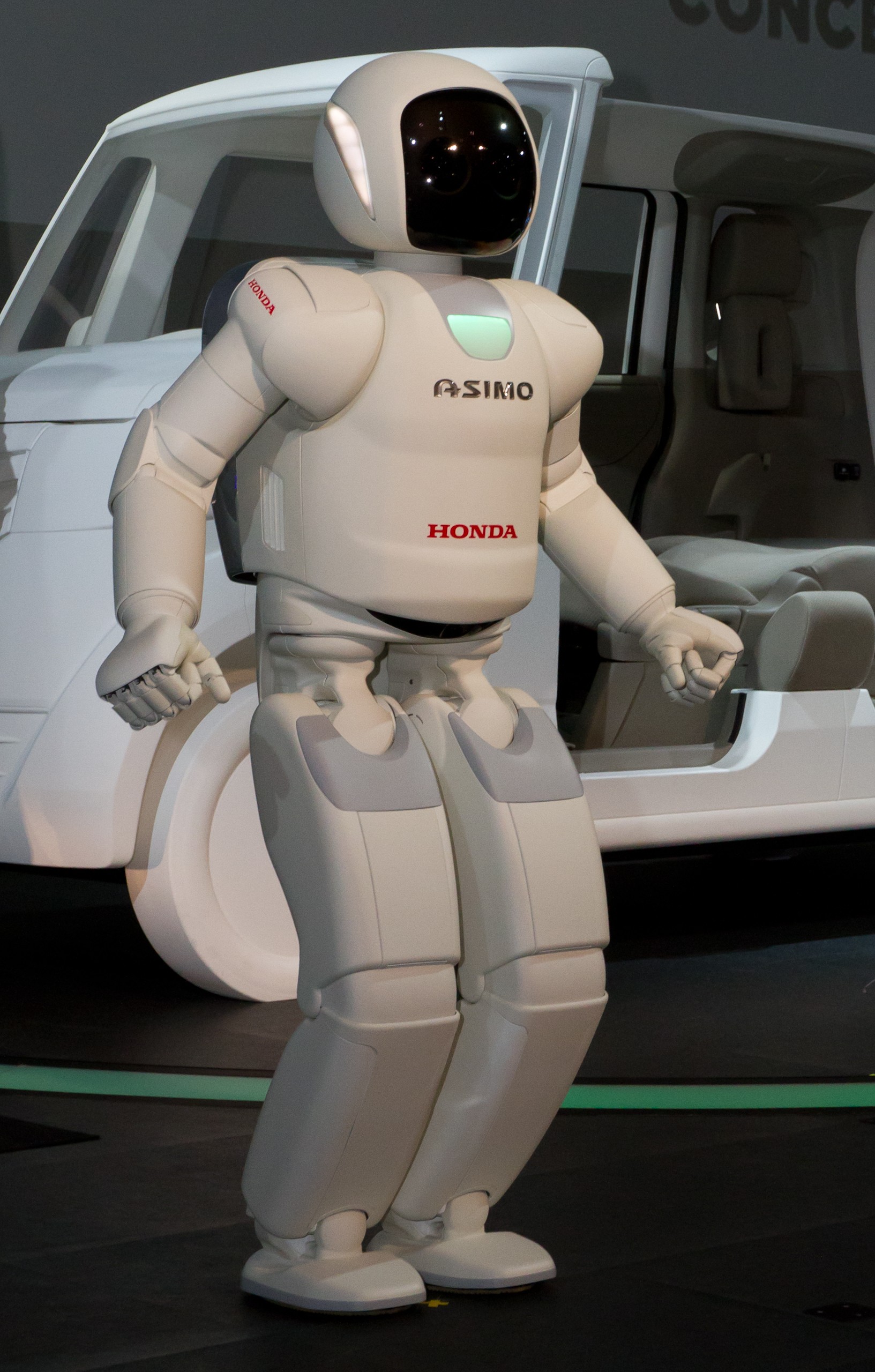
Honda's ASIMO (here in a 2011 version) was the face of humanoid robotics for more than two decades. Photo: Morio, via Wikimedia Commons (CC BY-SA 3.0).
No longer pilots, but contracts
Toyota has seven Digit robots, from Agility Robotics, loading and unloading parts bins on the RAV4 line at its plant in Woodstock, Canada, since April. They work under a commercial contract, on the model the industry calls robots-as-a-service: the factory does not buy the robot, it rents it and pays by the hour. BMW put Figure 03 robots to work at its Spartanburg plant in the United States, and has already announced a pilot in Europe, in Leipzig.
Digit, from Agility Robotics, on its first real day of work in GXO's logistics operation. Video: Agility Robotics.
And then there is Atlas, from Boston Dynamics, perhaps the best-known robot in the world. The fully electric version lifts up to 50 kilos at peak, has 56 degrees of freedom, meaning it articulates across 56 axes of movement, and swaps its own battery with no human help. Its entire production run for this year is already sold, committed to Hyundai, which owns Boston Dynamics, and to Google DeepMind. There is none left for anyone else.
Rent, buy, or not even that
A robot only steps onto an assembly line when the math works. Renting a Digit costs about $30 an hour, and Agility says it pays for itself in under two years when it earns more than a worker at the same fully loaded cost on a repetitive task. That is a supplier's price, not a universal bargain, but it explains everything: the moment the decision stops being about engineering and becomes a spreadsheet, adoption no longer depends on the technology, it depends on the calendar.
That is why, when someone asks where you buy one of these, the answer from people who follow the field is not "on Amazon". Most industrial models are not even sold: they are rented. Some not even that, since Atlas has its whole year's output reserved. Research models are bought straight from the maker or from specialist distributors such as RobotShop, and run from $13,500 for the basic version to over $50,000 for a lab configuration with hands and onboard computing. The version that shows up on Amazon is pricier, around $18,000, and comes locked down, with no programming. Amazon is the shop window, not the store.
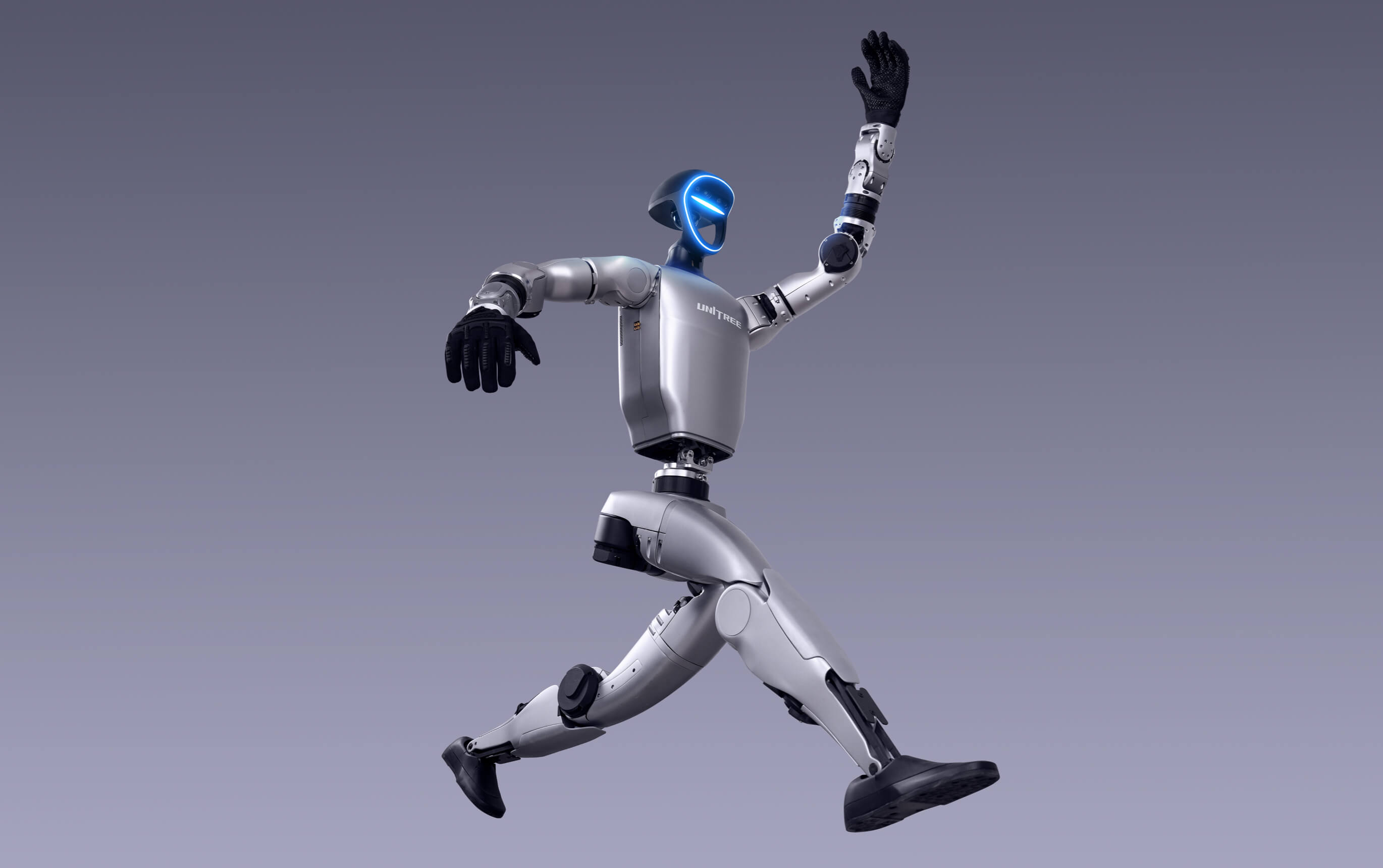
The Unitree G1, from $13,500. Image: Unitree Robotics.
What really changed is the floor. Unitree announced the R1, a near-full-size humanoid, for $5,900. Here is the line that separates excitement from reality: this is not one of the robots that go to work. It does cartwheels and handstands in spectacular videos, but teleoperated by a person, and it is aimed at research and hobbyists, not an assembly line. The breakthrough price comes from China, which now makes the overwhelming majority of these machines; TrendForce estimates that Unitree and AgiBot alone account for nearly 80% of all units sold this year.
The genuinely capable robots all hit the same wall: the hand. Tesla delayed Optimus because of it, the hardest and most expensive part to manufacture, which is why the robots already working stick, for now, to picking up and putting down boxes, not assembling fine parts. And Europe is not out of the race: Germany's NEURA Robotics is one of the few Western makers competing head-on with the Chinese.
What to do about it
The instinct, faced with this, is the fear of losing your job. The more useful reading is less dramatic and something you can act on. What these machines take away, for now, is the most repetitive and physically draining work, not the work that demands judgment, context or human contact. So it is worth:
- Looking honestly at your own role and separating the part that is predictable repetition, the first to go, from the part that requires judgment.
- Investing in the skills that do not yet fit inside a robot, such as solving ill-defined problems, coordinating people and reacting to the unexpected.
- For anyone who decides inside a company, remembering that, in Europe, a humanoid on an assembly line is still a machine like any other: it has to meet the same safety rules and CE marking as the rest, and the real advantage lies in retraining the people you already have.
The question is no longer whether robots will replace us. It is how much it costs to hire one. And the answer, this week, already comes with an hourly rate, a delivery date and an invoice at the end of the month.
Sources: Automate 2026, Boston Dynamics, Agility Robotics, BMW Group, Figure, 1X, Honda, Unitree, TrendForce.
#StaySafe
🙏🖖