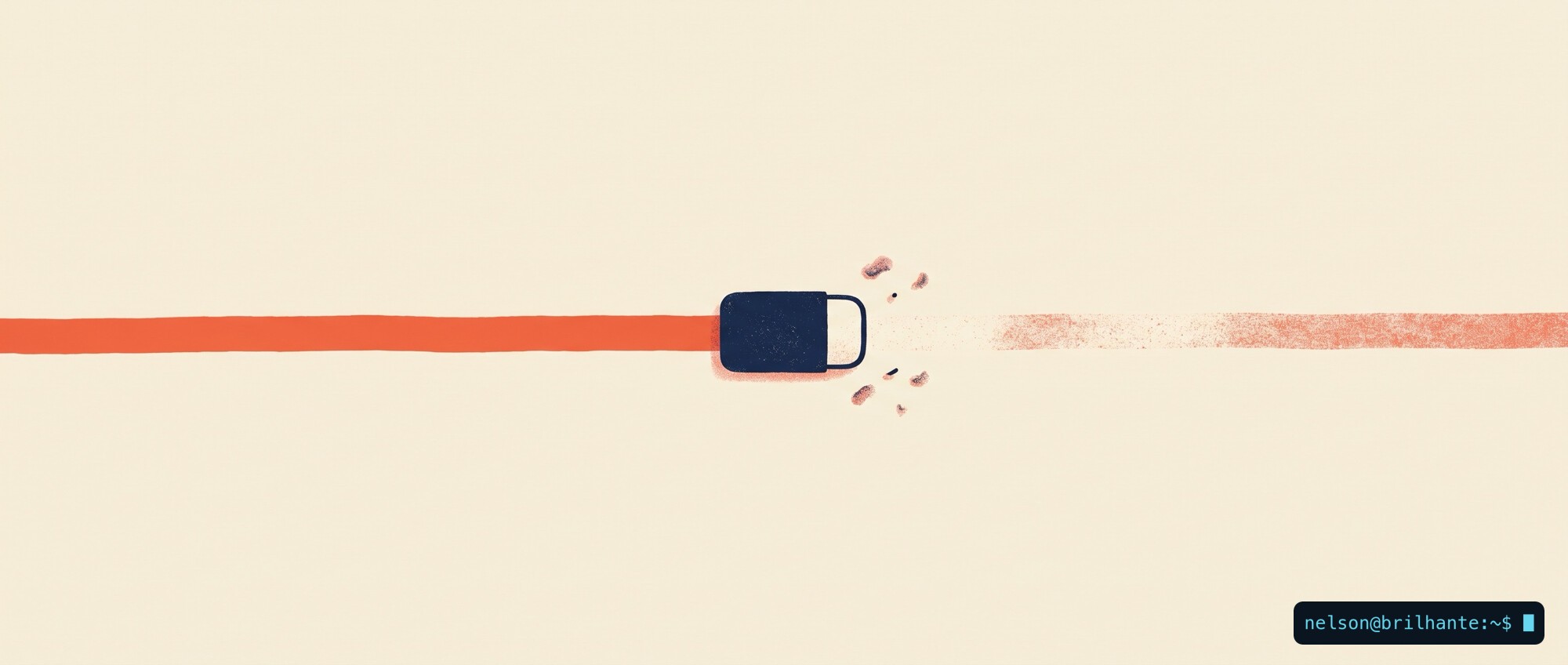
In early 2025, Google deleted from a page of principles a sentence it had written seven years earlier: that it would not design artificial intelligence (AI) for weapons or for technologies meant to hurt people. The removal was explained in a blog post co-signed by Demis Hassabis, head of DeepMind, Google's AI division, with the argument that "there is a global competition for AI leadership" and that "democracies should lead".
Here is what should worry anyone, not only people who work in tech: a red line a company can erase whenever it suits them was never a safeguard. It was marketing.
Rules that rewrite themselves
Google's pledge was already hollowed out. In 2021 a spokesperson explained that the principles applied only "to custom AI work, not general use of Google Cloud services", which meant "our technology can be used fairly broadly by the military". In 2025 the sentence itself was gone. The report "When Algorithms Go to War", by the organisations PAX and Privacy International, documents the same move at Meta and OpenAI, which reversed bans on military use, and notes that OpenAI signed a 2024 deal with Anduril, a weapons company. There was resistance from inside: nearly 200 DeepMind workers signed a letter in 2024, and in April 2026 more than 600 Google employees demanded that the chief executive bar the Pentagon from using the company's AI for classified work.
The case that proves the rule
Anthropic, the company that built the assistant Claude and stakes its image on "AI safety", deployed Claude across a US nuclear-weapons laboratory (Lawrence Livermore) and inside Palantir's military platform. Even so, it tried to hold two limits: Claude could not be used for domestic surveillance or in autonomous lethal operations. The result: in March 2026 the Pentagon labelled Anthropic a "supply-chain risk", the first time it did so to an American firm, and the Secretary of War publicly promised to "make sure they pay a price for forcing our hand". Meanwhile, the report notes, Claude was used anyway, through Palantir's Maven targeting system, in US operations against Venezuela and Iran.
The lesson cuts both ways. The company that erased its red line kept the contracts. The company that tried to keep one was punished, and the technology was used regardless.
Anyone who works in security and governance knows the pattern. A control the controlled party can switch off on its own is not a control, it is documentation. A "responsible AI" policy with no external audit and no legal force is worth exactly what any promise rewritten in an afternoon is worth. The report puts it plainly: these policies "can easily be reversed or withdrawn at will" and are "no substitute for international standards". And where human rights policies do exist, they tend to bind suppliers rather than customers or end use, leaving the hard calls to the home government's judgement. The authors call it "a due diligence gap where it matters the most".
What to do with this:
- Read any voluntary "responsible AI" commitment as reversible: it is an intention, not a guarantee.
- Demand that limits live where the company cannot erase them, in law and in contracts, with clauses on end use and not only on suppliers.
- Back the international talks now under way: in June 2026 the UN began discussions on AI in the military domain, and a treaty on autonomous weapons is on the table.
A promise you can delete with a blog edit was never a safeguard; it was an image campaign. The only rules that hold are the ones written outside the company, and those are still unwritten.
Source: "When Algorithms Go to War", PAX and Privacy International (June 2026).
#StaySafe
🙏🖖