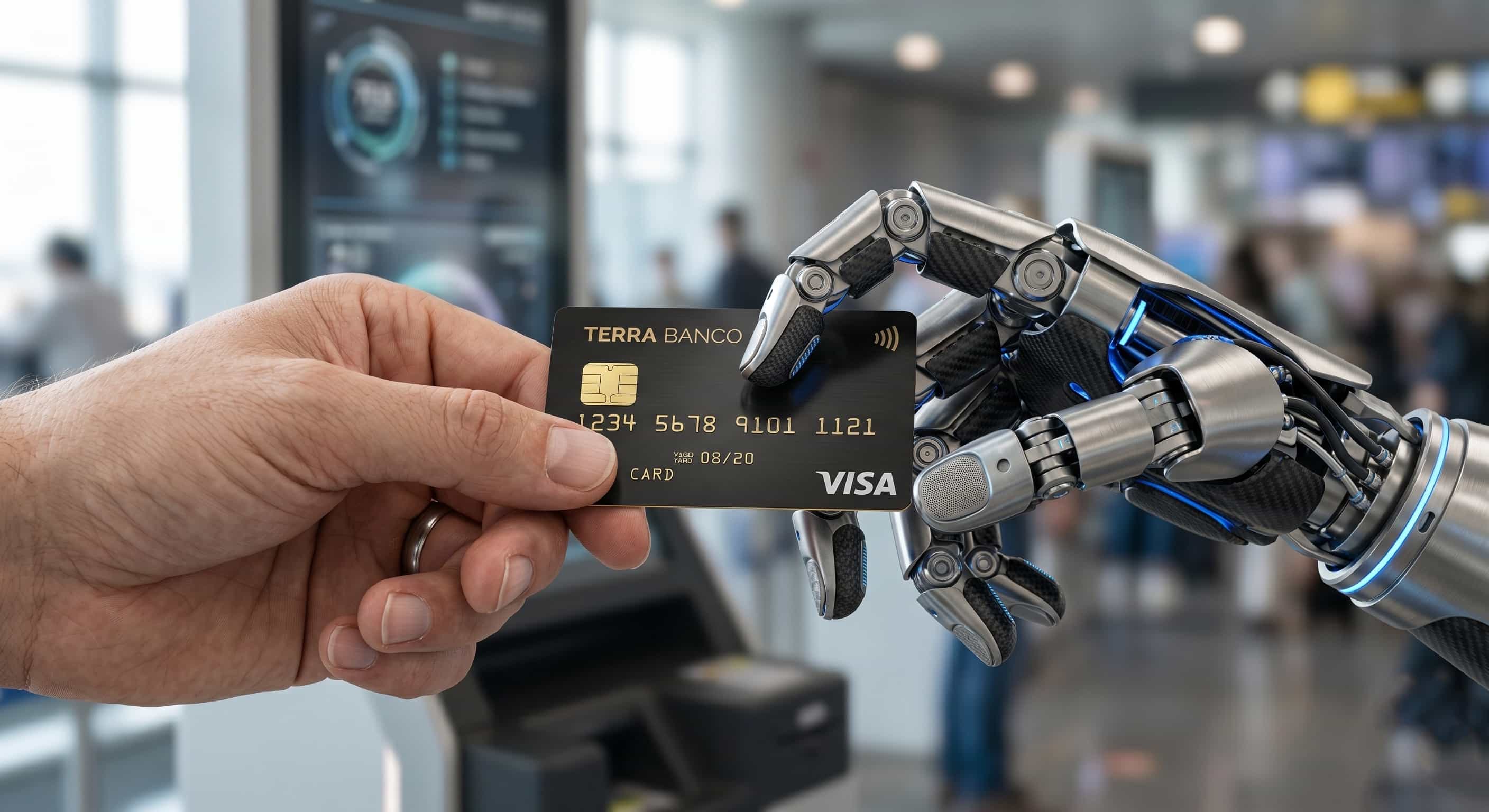
Visa announced on 10 June a strategic collaboration with OpenAI that will let ChatGPT buy and pay on a user's behalf. The companies unveiled the deal at the Visa Payments Forum in San Francisco, marking the moment the AI assistant moves from merely recommending products to actually closing the purchase and the payment.
The move is part of Visa Intelligent Commerce, the company's push to bring secure payments into new digital spaces. It opens the door to so-called agentic commerce, where a software agent acts on a person's behalf: it reads the request, picks the product and completes the transaction, without the manual step of entering a card and confirming. Visa and OpenAI also say they will explore enterprise uses, including developer experiences built on Codex, OpenAI's programming assistant.
How it works, and what the user controls
According to Visa, its payment capabilities will be integrated into OpenAI's products, giving merchants and developers a direct way to accept payments initiated by agents. Visa handles the network, the tokenization (replacing the real card number with a single-use code so the merchant never sees the original details) and real-time fraud detection. The company operates in more than 200 countries and territories.
Payments run inside rules the user sets: spending limits, approved merchant categories and required approvals before a purchase goes through. "By integrating with Visa Intelligent Commerce, we're building the infrastructure for secure, transparent, and user-controlled agentic transactions," said Marco Mahrus, Head of Partnerships, Commerce at OpenAI.
What we still don't know
For now, the system is "in the process of deployment," Visa itself admits, warning that the final version may not include every feature described. Neither company gave a launch date or explained how the experience will look to consumers.
And questions remain, raised by the trade press. Who covers the loss if an agent buys the wrong thing, or if the user disputes the charge? How will banks handle fraud claims on payments started by an AI? Will people really authorize an automatic purchase without reviewing each step? The recent precedent is not encouraging: Instant Checkout, a buying feature OpenAI launched in late 2025 and retired in March 2026, charged merchants a 4% fee and saw little adoption.
Jack Forestell, Visa's Chief Product and Strategy Officer, acknowledged the leap himself: going from AI recommending what to buy to AI doing the buying "requires a whole different level of trust." For Kumar Senthil of firmly.ai, the announcement "is a signal that agentic commerce is getting closer to the point of transaction, not just discovery."
Where the real security risk lives
There is a problem no press release solves: prompt injection, now ranked by OWASP as the top risk for systems built on language models. An attacker hides instructions inside a web page, an ad or a product description, and the agent, which reads everything, obeys without realizing it was tricked. In an assistant that only talks, the damage is a wrong answer. In an assistant that holds the card, the damage is a purchase that gets paid.
Tokenization protects the card number, but it does not answer the question that matters: what about a transaction that is authorized, except that the person who shaped it was a third party manipulating the agent? This is not the card theft banks are used to. It is fraud with apparent consent, and today's chargeback models were not designed for it. The proof is unresolved too: telling apart what the user asked for from what the agent decided on its own needs an auditable record no one has shown yet. In markets such as Europe, another question is waiting, strong customer authentication, the step where the bank confirms who is paying, now that an agent, not the person, closes the sale.
The partnership pairs the biggest consumer AI platform with the largest payment network outside China, on ground where convenience and risk grow together. The hardest part is still ahead: proving that a purchase handed to a machine is still a purchase the cardholder controls.
Sources: Visa's official announcement; coverage by SiliconANGLE and The Next Web.
#StaySafe
🙏🖖